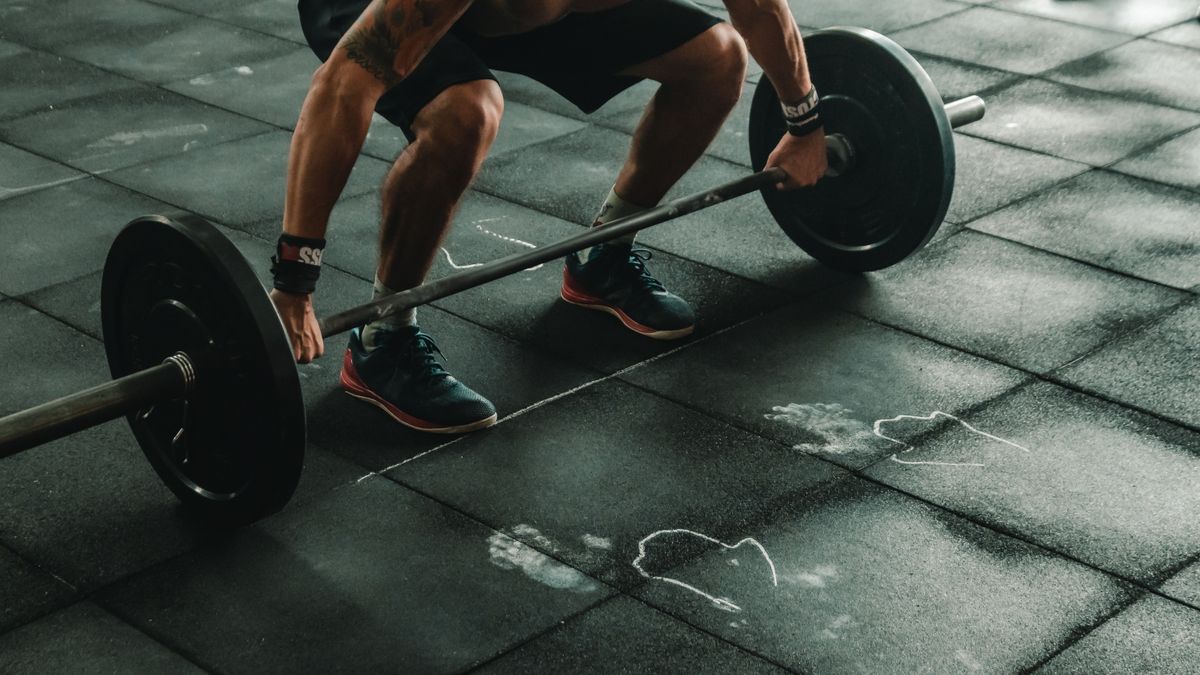
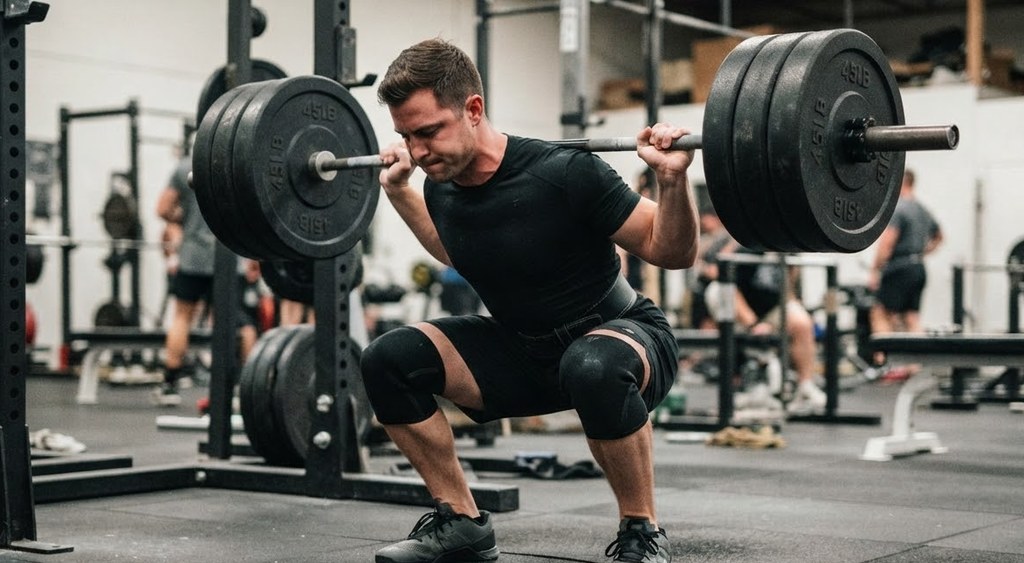
A cushioned running shoe under a heavy squat is working against you. Soft foam compresses unevenly as the bar loads, so the platform you are pushing from moves while you are trying to stand up. What you want instead is a flat, wide, firm base, which is why a proper gym training shoe feels almost hard by comparison.
The range splits cleanly into two families, and picking the wrong one is the usual mistake.
The two families
The 608 line is the cushioned, general-purpose option: enough support for a class or a treadmill warm-up, enough structure for moderate lifting. The Minimus line is the specialist: low to the ground, minimal underfoot, built so nothing compresses when you load it.
If your session is lifting with some conditioning on the end, take a Minimus. If it is a class, a machine circuit and occasional weights, take a 608. Both sit in the same cross training shoes category but they are not interchangeable.
The Minimus family
Minimus TR v2
The core lifting shoe. Low drop, flat platform, wide enough through the forefoot that your toes can spread and grip the floor, which is what actually makes a squat feel stable. It handles short conditioning work fine; it is not a shoe for running a mile in.
Minimus TR BOA v2
The same shoe with a dial closure instead of laces. That sounds cosmetic and is not, for one specific reason: you can tighten it precisely and reproducibly between sets without stopping to retie, and a lace that loosens mid-session changes how the shoe feels under load.
The 608 family
MX608v5
The long-running gym default. More cushioning than a Minimus and a broader remit, comfortable enough to wear all day and structured enough that it does not collapse under moderate weight. The sensible choice if this is your only pair of trainers.
608v5
The same platform in a slightly different build, and worth comparing side by side because the fit differs marginally through the midfoot. Both do the same job, so this comes down to which one sits better on your foot rather than any difference in what they can handle.
MX608v5 Slip Resistant
The version with a slip-resistant outsole, aimed at people on their feet at work rather than only in the gym. If you train straight after a shift on a hard floor, this is the one that covers both.
Two crossovers worth knowing about
AC Runner
Listed in the training category but built to run in. Useful if your sessions genuinely mix a treadmill block with light weights and you refuse to carry two pairs. Do not squat heavy in it — the whole point of the cushioning that makes it good on a treadmill is what makes it wrong under a bar.
Fresh Foam X RCVRY
Not a training shoe at all. It is the slide-on recovery shoe for afterwards, and it earns its place in a gym bag rather than on the gym floor. Worth a mention because it turns up in the same category listing and gets bought by mistake.
Getting the fit right
Try them with the socks you actually train in, and stand up properly rather than judging the fit sitting down. A lifting shoe should feel wide and planted, not snug — snug is a running fit and it stops your foot spreading under load, which is exactly the thing you bought the shoe for.
Check your heel does not lift at the back when you squat down in them. Heel lift under bodyweight becomes heel slip under a bar, and no amount of lacing fixes a last that is wrong for your foot. Most of these training shoes come in more than one width, so try the wider option before assuming the model is wrong for you.
Wrapping Up
Lifting-led sessions take a Minimus, mixed sessions take a 608, and standing all day before you train makes the slip-resistant version the obvious pick. None of this changes the weight on the bar, but a stable platform is the simplest technique improvement available.
The full training range is on New Balance, with drops, widths and closures listed model by model.
If you are putting a home or gym kit together, The Vogue Club runs comparisons like this one throughout the year.