
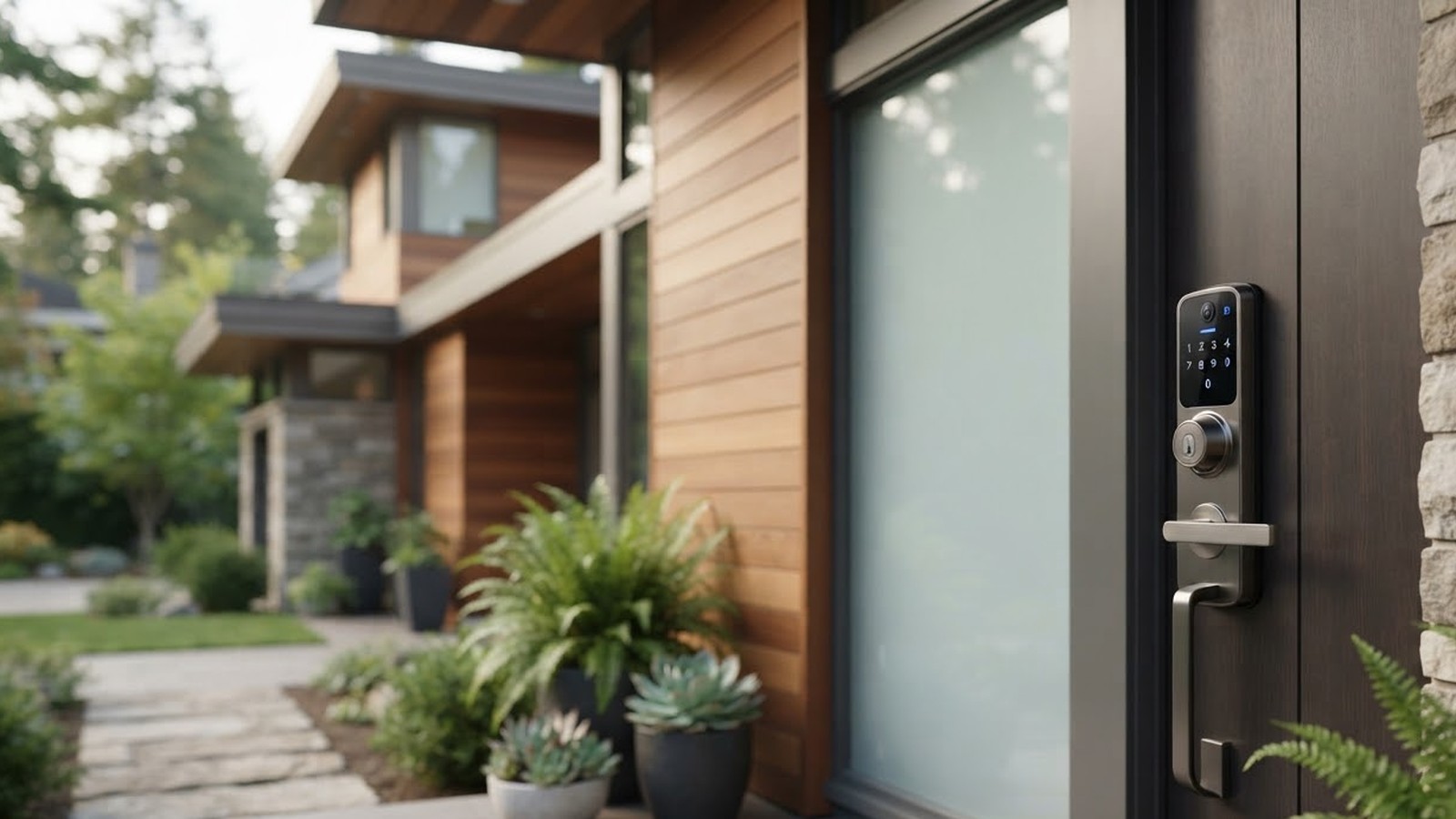
Everyone has a version of the same arrangement — a key under a pot, one with a neighbour, another buried in a bag you have to empty on the doorstep in the rain. It works until the afternoon a cleaner arrives early, or a relative needs letting in while you’re two hours away, and suddenly the whole system depends on somebody being home. A handful of smart door locks and keypads quietly retire all of it, turning the front door into something you can open, share and check on from your phone. Here’s what goes on the door, what sits beside it, and how the pieces end up watching the same entrance together.
A Front Door That Opens Without a Key
The lock is where this starts, because it’s the part that decides who gets in. The Yale Assure Lock 2 (Smart Lock) opens on a keypad code or straight from the app, which means a visitor can be let in while you’re still at your desk, and the door can be set to lock itself at a particular time each evening so nobody has to remember. It holds up to 250 separate codes — the dog-walker, the in-laws, the weekend guest, each with their own — and when one is no longer needed, it disappears without a locksmith being involved.
Codes for the People Who Need Them
Not everyone wants to pull out a phone on the way through the door, and that’s where the panel on the wall earns its place. The ADT Blu Keypad arms and disarms the system by touch, lights up as you come within a few feet of it, and carries its own user codes so everyone in the house can work it without sharing a login. For anyone who’d rather not touch a screen at all, the ADT Keychain Remote does the same two jobs from a pocket up to seventy-five feet away — which suits arriving with both arms full of shopping rather better than unlocking a phone does. Both keep working through a keyless entry setup during a Wi-Fi drop, since they talk to the base directly rather than over the internet.
Knowing the Door Closed Behind You
A lock tells you the door is locked; it doesn’t tell you the back door was ever shut. That’s the job of the small contacts on the frames, and the ADT Blu Door/Window Sensor covers an ordinary entry point with nothing more than an adhesive strip. On the doors that get opened twenty times a day, the ADT Blu Premium Door/Window Sensor adds shock sensing and a longer battery life, so a knock against the frame registers as well as the opening itself. When something does trip, the ADT Indoor Siren makes sure you hear it from the other end of the house rather than only on a phone left charging in the kitchen.
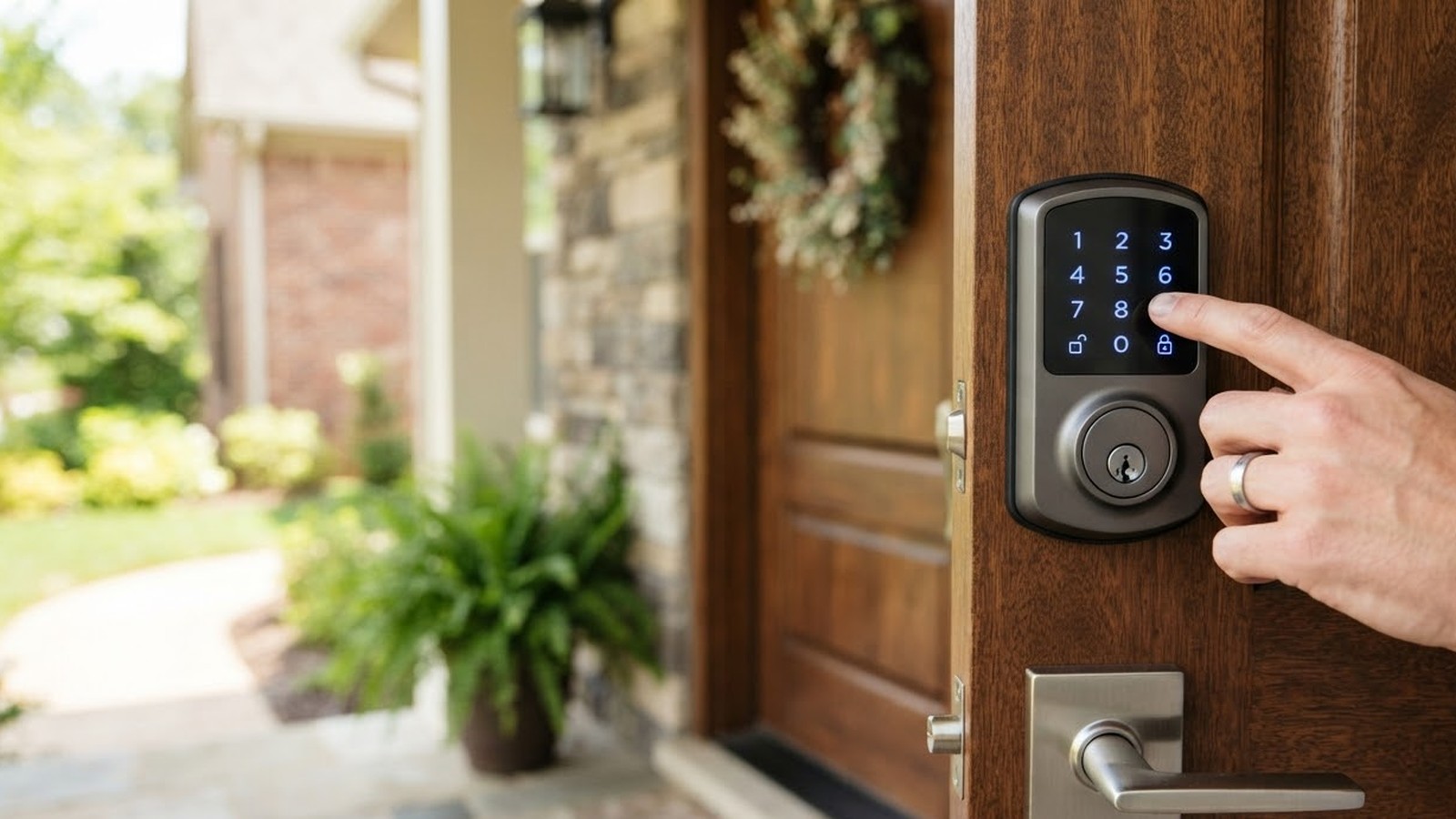
One System Behind Every Entry Point
What makes this feel settled rather than piecemeal is that the lock, the keypad, the remote and the sensors all report to the same place. One app shows you the door state, the codes in use and who came through, so a home security system stops being a set of separate gadgets with separate notifications. Build it in whatever order suits you — the lock first if sharing access is the daily problem, the sensors first if it’s the back door you keep wondering about — and each piece you add afterwards joins what’s already there instead of starting a new app on your phone. That’s the difference between a house full of clever parts and a house that simply knows its own doors.
Worth Remembering
A door that opens on a code, a panel that arms the house on the way out and a few sensors that confirm everything shut behind you add up to something simpler than the keyring they replace. Pick the part that solves your most frequent annoyance, set it up once, and the spare key under the pot becomes a habit you’ve quietly stopped needing. Browse the full range of smart locks and entry sensors and work out which piece belongs on your door first. For more practical guides to running a household, take a wander through TheVougeClub.