
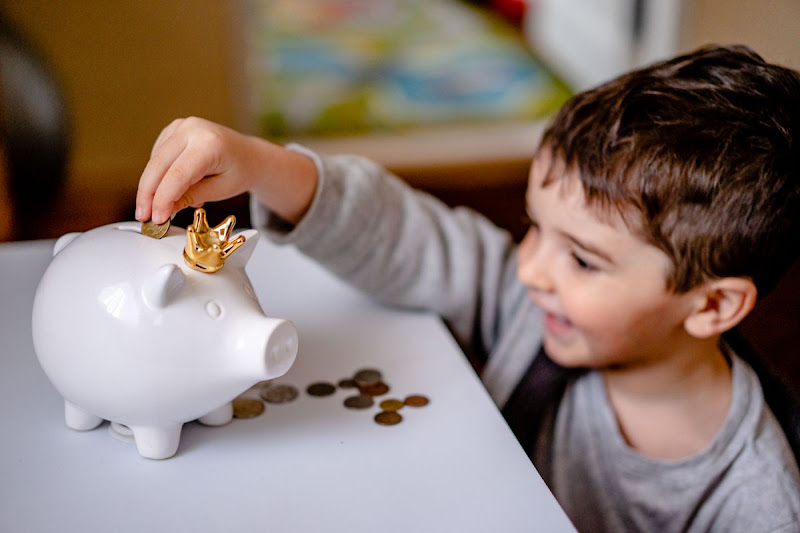
Money and time are the two math topics children use outside school almost every day. They count coins for a snack, check the clock before a favorite show and ask how many sleeps are left until a birthday. Yet both are surprisingly tricky to learn. Coins have values that do not match their size, and an analog clock has two hands that mean different things. Short, playful counting money games make the practice feel like play, which is exactly what keeps children coming back for another round.
A Skill Ladder From Coins to Clocks
Money and time skills build on each other in a fairly predictable order. Working up this ladder means each game feels like a small step rather than a leap.
- Know the coins and bills. Name each one and say what it is worth.
- Count a small handful. Add a few coins together to find the total.
- Count quickly. Add mixed coins fast enough that it feels natural at a store.
- Make a set amount. Choose the right coins and bills to reach a target total.
- Read the clock. Tell time on the hour, then with minutes, on analog and digital clocks.
- Use a calendar. Find dates and count forward and backward in days and weeks.
Six Games for Every Rung
Each of these money games for kids lines up with a step on the ladder, from kindergarten coin names to third, fourth and fifth grade calendar skills.
Break the Bank – Sorting (Kindergarten to Grade 2)
The first rung. Kids review coin and bill names, the person featured on each and its value, then sort them correctly. After five levels they earn a fun brain break where they catch falling coins. It is a gentle way to make sure a child can tell a dime from a nickel before any adding begins.
Money BINGO (Grades 1 to 5)
A classic game format applied to counting money. Children can choose to practice with coins, with bills or with both, and each win unlocks a collectible Bingo Bug. Because players pick the mix, it works for a first grader learning coins and a fifth grader adding larger amounts.
Dolphin Dash – Counting Money (Grades 2 to 4)
Speed comes next. Players add up coins and pick the right total, and the faster they answer, the faster their dolphin swims. They can race the computer or set up a private game against friends, which adds a little healthy competition to adding within 100.
Learn to Count Money (Grades 3 to 5)
This one flips the task around: children drag coins and bills into a box to reach a specific total. There are three levels, with amounts up to 99 cents, 10 dollars or 100 dollars, each with beginner and expert options. Finishing earns a customizable certificate to save, share or print.
Learn to Tell Time (Grades 1 to 5)
Time to move to the clock. Kids choose a digital or an analog clock and work through four levels that start with telling time on the hour and add minutes from level two onward. Practicing both clock types side by side helps children see that they show the same thing.
Calendar Game (Grades 3 to 5)
The top rung. Children listen to a clue and schedule an activity on the right date, such as “a week and two days after” a given day. It builds the habit of counting forward and backward on a calendar, which is surprisingly useful for homework planning too.
Tips for Parents
- Pair the game with real coins. Let your child count change from your wallet after a session.
- Ask about the clock. A quick “what time is it?” during the day turns practice into habit.
- Let them teach you. Asking a child to explain how they reached a total in one of the coin counting games shows whether they truly understand it.
- Move up only when it feels easy. Confidence on one rung makes the next one smoother.
Putting It Together
Money and time stop feeling tricky once children have had plenty of low-pressure practice. Start at the rung that matches your child today, celebrate each level they clear and mix in real-world moments at the store and around the house. A few short sessions of telling time games and coin practice each week go a long way.
All six games are on ABCya, alongside hundreds more learning games for Pre-K to grade 6. Stop by TheVougeClub for more ideas that make learning part of family life.