
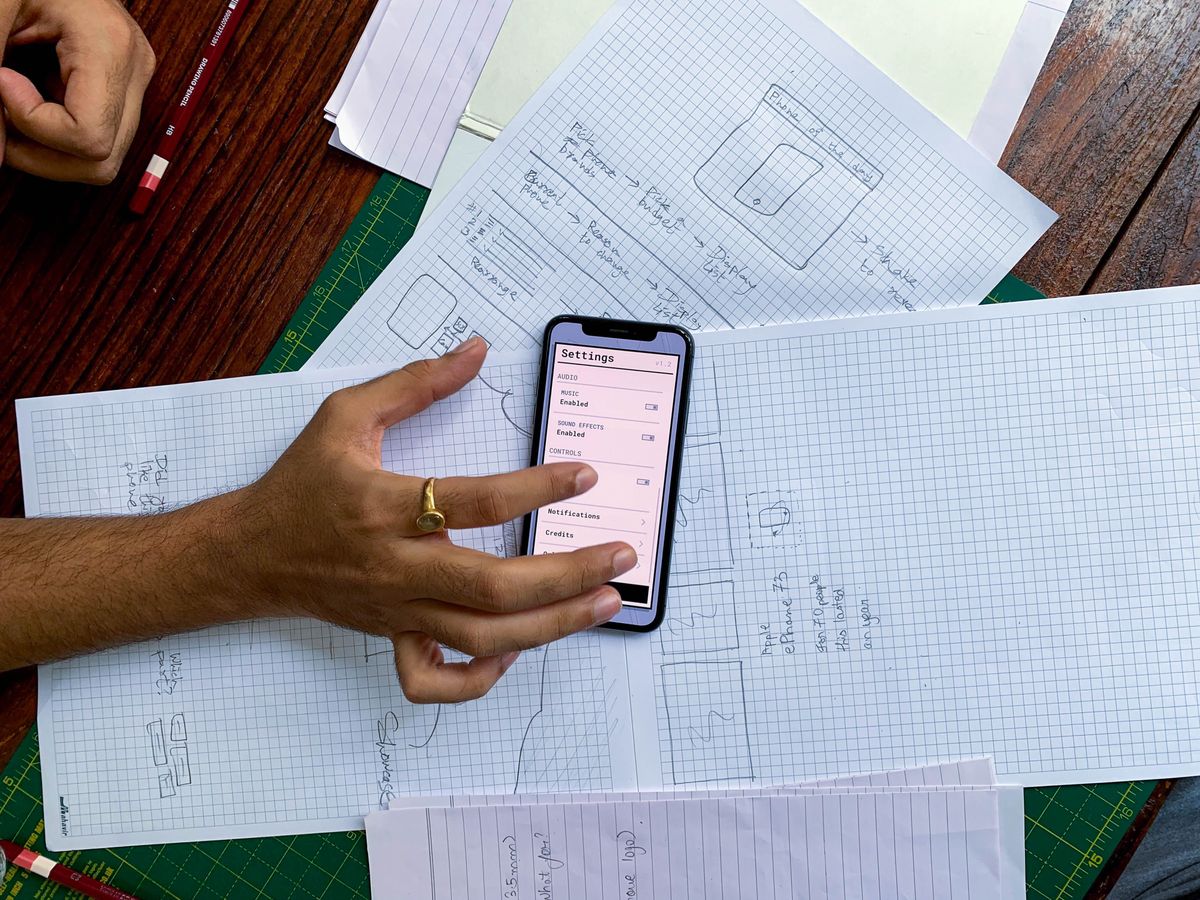
Most people who dream up an app stop at the same point. They know what it should do and who it is for, but turning that idea into something people can download feels like a job for a team of developers. That gap is closing fast. With an AI mobile app builder, you explain the app in everyday language and AI agents handle the design, the code and the backend, giving you a working iPhone and Android app you can test on your own phone.
Is Your App Idea Ready to Build?
Before you start, run your idea through a few quick questions. If you can answer most of them, you are ready for a first version.
- Can you describe the main thing the app does in one sentence?
- Do you know who will use it and what they need from it first?
- Will people need to log in, save information or pay inside the app?
- Does it need to live in the app stores, or would a web app do the job?
From Idea to App Store in Three Stages
Describe it
Write a short brief, the same way you would explain the app to a developer. Cover the screens you imagine, the people using it and the actions they should be able to take.
Shape it
The AI builds the screens, user flows and core features. From there, you change colors, add a feature or adjust how something works by asking in chat, so an app maker for small business owners feels more like a conversation than a project.
Ship it
Hosting, a secure database and APIs come preconfigured. Mobile apps are built with React Native and Expo, can be previewed in Expo Go while you work, and are ready to submit to the App Store and Google Play.
What Comes Built In
| Feature | What it means for your app |
|---|---|
| Logins | Email, one-time passcode and social sign-in, set up for you |
| User roles | Control what admins, staff and customers can see or change |
| Payments | Connect gateways such as Stripe to sell inside the app |
| Automation | Trigger actions when someone signs up, books or buys |
| Code ownership | Export your code to GitHub on paid plans |

Mobile App or Web App?
An app store listing is not always the right first move. The same platform builds web apps and progressive web apps that people can install straight from their browser. A web app suits booking systems, member portals and internal tools, where people mostly use a laptop or want quick access without a download. A mobile app makes more sense when your customers live on their phones, need notifications or will open the app several times a day. Many founders start with whichever version reaches their first users fastest and add the other later, since both are created from a plain description.
Who Gets the Most From It
An AI-built app is a natural fit for anyone who needs something real quickly and has no engineering team on hand. Startup founders use it to put a minimum viable product in front of early users before raising money. Small business owners create booking, loyalty or ordering apps that keep customers coming back. Agencies and freelancers deliver client apps in less time, and creators turn a community, course or newsletter into an app of their own. In each case, the goal is the same: test the idea with a working product rather than a slide deck, then improve it based on what real people do. That is why the chance to build an app without coding appeals to so many first-time makers.
Mistakes First-Time App Makers Often Make
- Building every feature at once. Launch with the one task your app must do well, then grow it.
- Skipping real-world testing. Open the app on your own phone early and hand it to a few friends or customers.
- Adding payments too soon. Get the core journey right before asking anyone to pay.
- Forgetting about roles. Decide early who can edit content and who can only view it.
- Writing a vague brief. The clearer your description, the closer the first version will be to what you pictured.
Ready to Build Your App?
Emergent helps founders, creators and small business owners turn an app idea into a working iPhone and Android app without hiring a development team. Its AI agents design the screens, write the code and set up the backend from a plain description, while logins, payments and hosting come ready to use.
Launching an app used to mean months of planning, hiring and waiting. Today you can describe what you want, refine it in short rounds and put a working version in front of real users. For anyone with an idea worth testing, a no-code app builder is the quickest way to find out whether it has legs, and to keep improving it once people start using it.
So go ahead and start with the one feature your users need most.
Check back on TheVougeClub for more practical guides that make everyday life easier.