
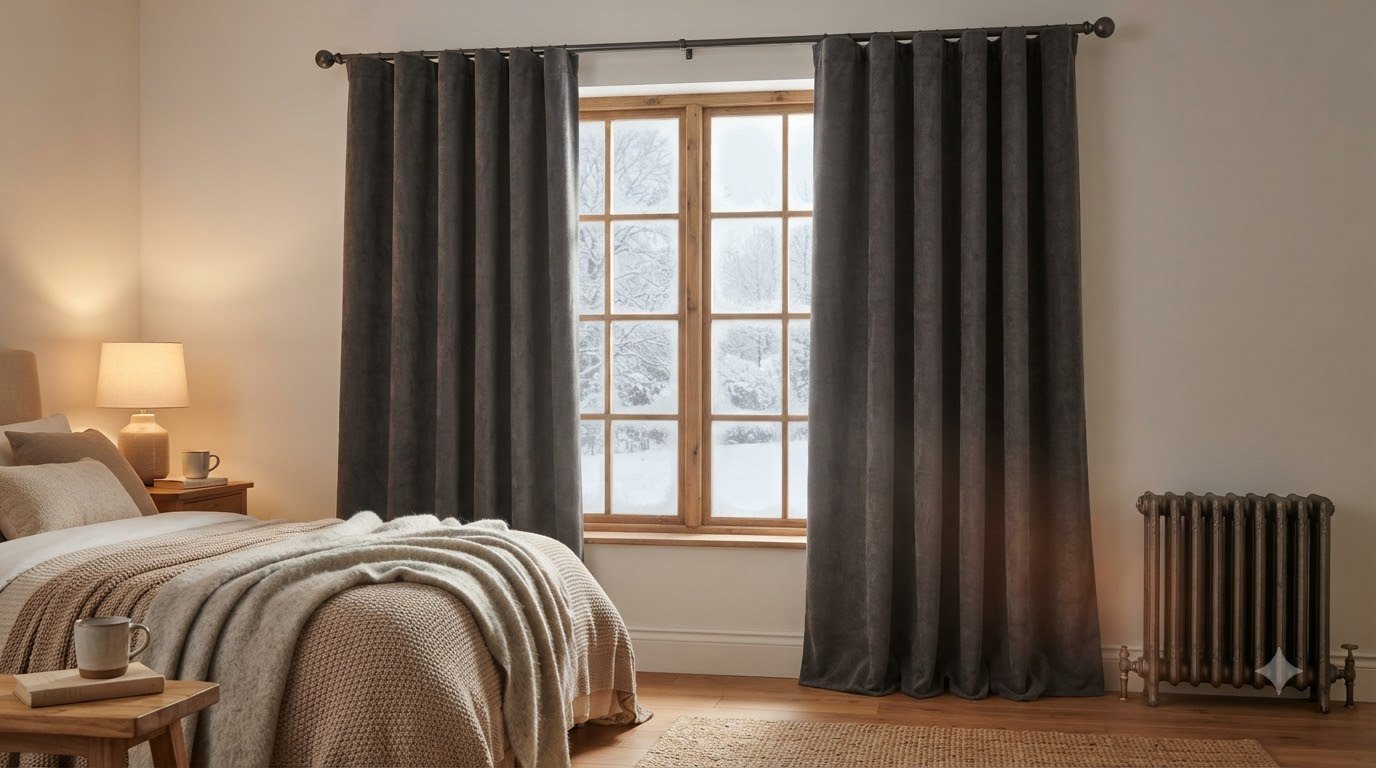
A single-glazed window loses heat all night whatever the radiator does, and the least costly fix is not glazing but fabric. A lined panel across a cold window measurably slows that loss, which is why thermal curtains sell hardest in October rather than in summer. The trouble is that three different things get sold under overlapping names — thermal, blackout and light-filtering — and they do not solve the same problem. This piece separates them, then lists five panels that cover the realistic situations.
Thermal, blackout and light-filtering are three different jobs
Thermal means an insulating backing, often a brushed fleece layer bonded to the face fabric. It traps a pocket of still air between glass and room. That is the one that affects how a room feels at two in the morning.
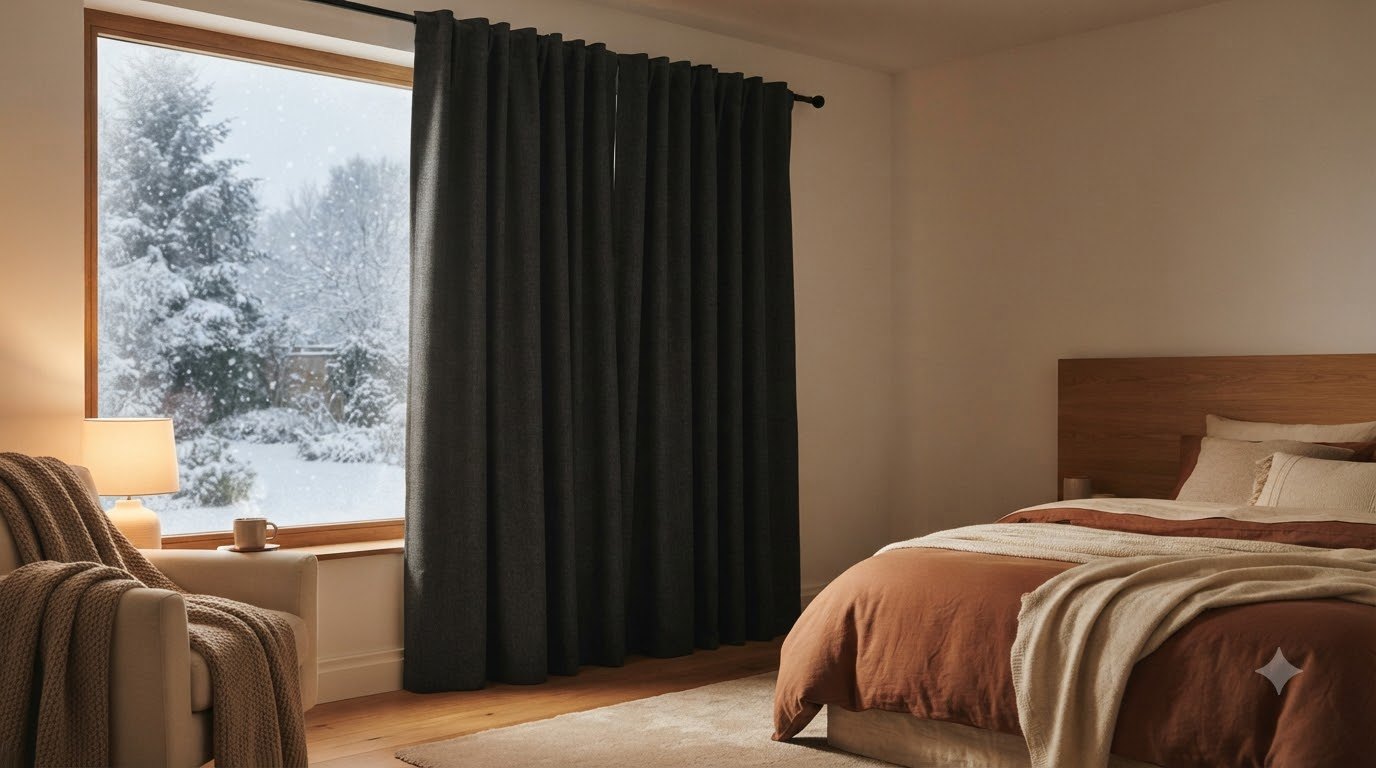
Blackout means light does not pass through, usually achieved with a dense weave or a coated backing. A blackout panel is often thermal as a side effect of its density, but a thermal panel is not necessarily blackout — plenty let a grey glow through at dawn. If the aim is a child sleeping past five in June, blackout curtain panels are the specific thing to look for, not simply a heavy cloth.
Light-filtering, sold in French as tamisant, is the opposite intent: a loose, often plain weave that softens daylight without darkening the room. It is what you want in a kitchen or a north-facing room where losing the light would be the bigger loss.
Weave texture sits across all three. A chenille or textured cotton reads as substantial and hangs in deep folds; a flat printed cotton hangs lighter and shows a pattern better. Both matter more to how a room looks than the lining does.
Five panels for five window problems
One panel per situation, all from the same window textiles range.
Insulating plain curtain with fleece backing and eyelets
The straightforward thermal answer. The fleece reverse is the working layer and the plain face keeps it usable in any room. Eyelet heading means it slides on a pole without tape or hooks.
Thermal blackout jacquard curtain, arch motif
Both jobs at once: a jacquard weave dense enough to block light, with thermal performance from the same density. The arch motif is woven rather than printed, so it reads from both sides — useful when the curtain is visible from the street.
Plain light-filtering bachette curtain with eyelets
The tamisant option. Bachette is a sturdy plain cotton weave that diffuses daylight instead of stopping it, and it is the right call for a room that is cold but also dark. Plain weaves also hide dust better than a pile fabric, which matters on a window that gets opened daily.
Chenille-weave curtain with eyelets
Chosen for texture rather than performance. Chenille has a short velvety pile that catches light along the folds, which gives a plain colour depth it would not otherwise have in a large window.
Cotton-linen curtain with floral base
A lighter cotton-linen mix with a printed floral border at the hem. This is the decorative end of the range, for a bedroom or a landing where the window is not the heat problem. Cotton-linen creases rather than drapes crisply, which is part of the look.
Measuring, and the mistake almost everyone makes
Width first: a panel should measure one and a half to two times the width of the pole to hang in proper folds, not flat. Drop second, measured from the pole itself rather than from the window frame. The common error is ordering to the window and ending up with a curtain that stops above the sill, which leaves the coldest part of the glass uncovered and undoes the point of buying eyelet curtains in the first place.
The Takeaway
Match the panel to the actual complaint. Cold room, enough light: thermal with a fleece back. Street lamp outside the bedroom: blackout jacquard. Dark room that is still draughty: a light-filtering weave in a heavier cloth. Blancheporte publishes the lining type and the finish for each panel, and keeps a curtain guide alongside the range for anyone measuring a pole for the first time, including the width multiplier that decides whether a panel hangs in folds or flat. Fresh home-textile picks appear on thevougeclub.com through the colder months.