
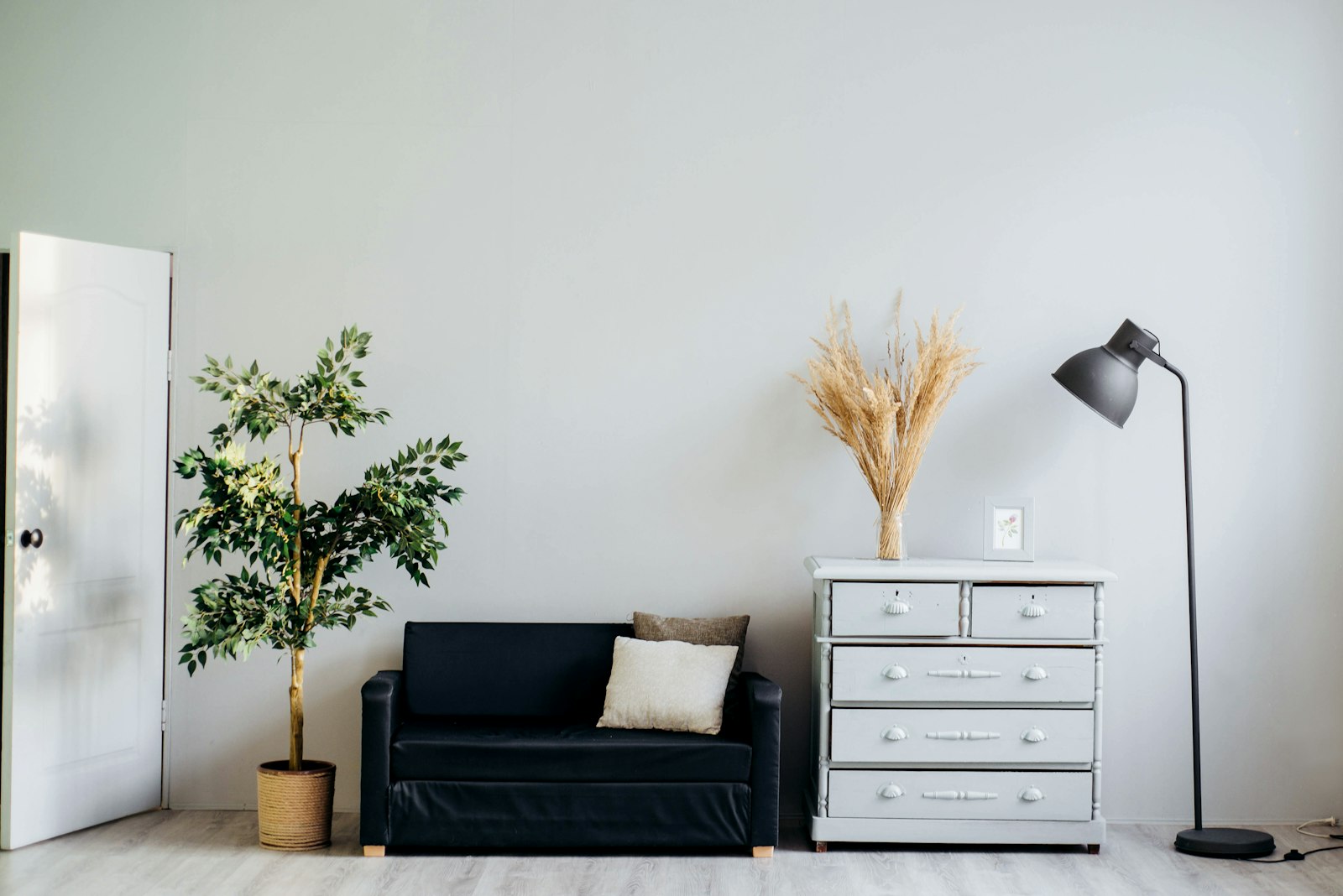
A single ceiling light is the reason a lot of living rooms feel like waiting areas after dark. It throws everything downward from one point, flattens the room, and leaves the corners dim while putting glare exactly where people sit. Adding two or three floor lamps and table lamps fixes it faster and more completely than any amount of redecorating.
The principle is layering. Instead of one source doing all the work, you use several at different heights, each lighting a specific thing — a chair, a side table, a corner. The room gains depth because the light is no longer uniform.
Think in jobs, not in fittings
Before choosing anything, walk the room after dark and note where you actually need light. Almost every living room has the same three gaps.
The first is a reading position. Somebody sits in the same chair most evenings and squints. That wants a tall lamp beside and slightly behind the shoulder, so the light falls onto the page rather than into the eyes.
The second is a dark corner, usually diagonally opposite the door. Something there stops the room ending abruptly and makes it read as larger than it is.
The third is the surface people put things on — the side table beside the sofa. A low, warm light there is what makes a room feel occupied rather than lit.
Six lamps and where each one belongs
Three floor lamps and three table lamps, which between them cover every job above. These living room lamps are worth considering in pairs rather than individually, since layering is the point.
Hugo Tripod Floor Lamp
A tripod base spreads the weight over three points, which makes it stable on a rug where a single-stem lamp wobbles. The height puts the shade above seated eye level, so it lights the area without shining into the room. This is the one for a reading chair.
Floyd Retro Floor Lamp
A more sculptural shape that works when the lamp is also meant to be looked at. It suits a corner where there is nothing else happening, because it gives that corner a reason to exist rather than simply illuminating it.
Clementine Boho Floor Lamp
Textured and softer in outline than the other two, which diffuses the light rather than directing it. Good in a room that already has hard edges — glass, metal, a flat-screen — and needs something to counter them.
Lea Ribbed Ceramic Table Lamp
Ceramic with a ribbed body, so it has presence switched off as well as on. On a side table it does the low warm layer that makes the difference between a room that is lit and a room that feels comfortable.
Rimini Touch Dimmable Table Lamp
The dimming is the feature. Being able to drop the level without getting up changes how a lamp gets used, and a touch base means no fumbling for a switch behind the shade. This is the bedside and sofa-side pick.
Hebe Ribbed Ceramic Table Lamp
Similar in construction to the Lea but a different profile, which matters if you want two table lamps in one room without them looking like a matching set.
Two lamps is usually the point at which a room stops feeling under-lit, so treat a pair of reading lamps as the starting position rather than the finish.
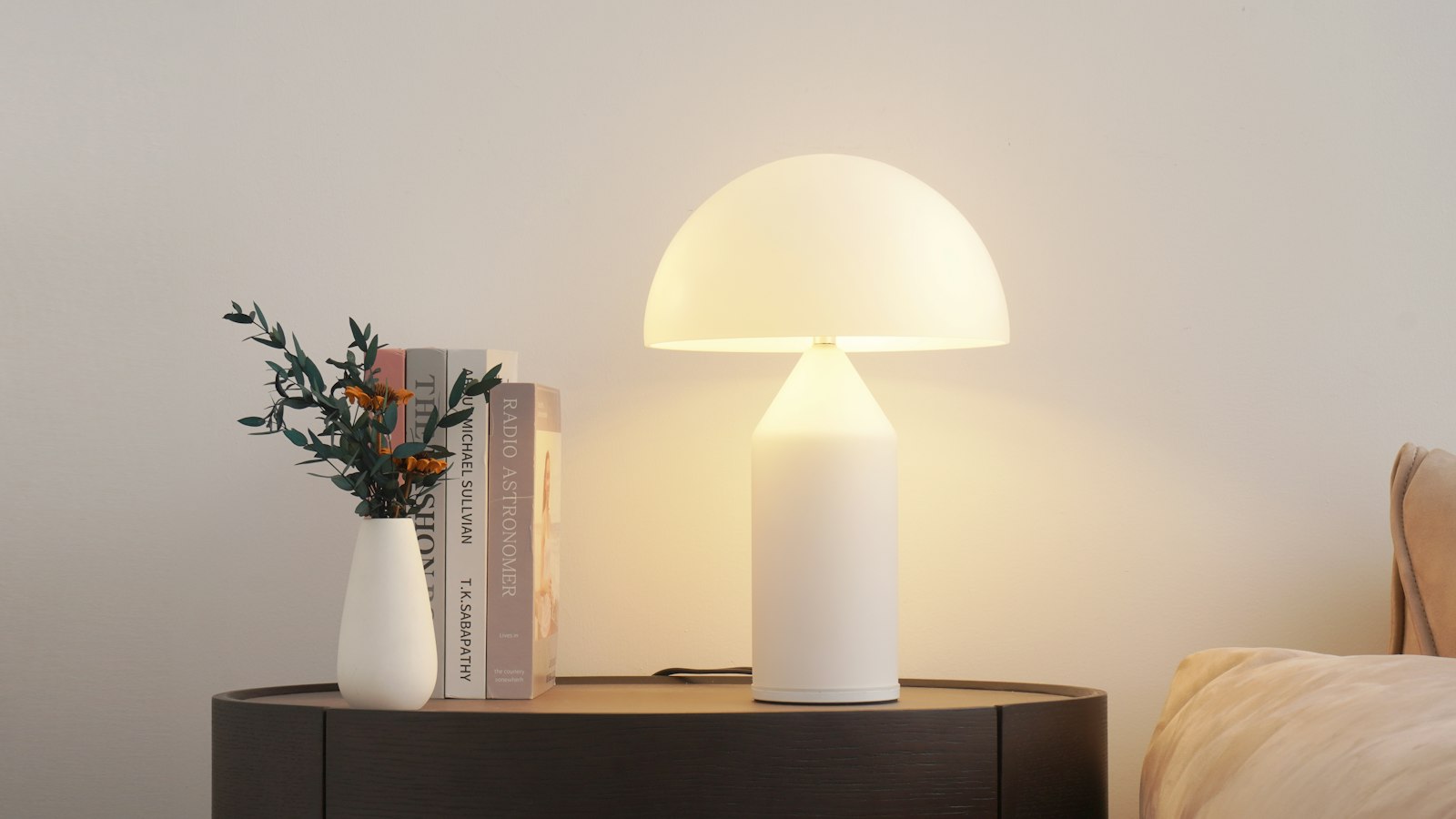
Quick tips for getting the layering right
- Aim for three light sources in an average living room, not one — two lamps plus the ceiling fitting is the minimum that reads as layered
- Keep the bulb temperature consistent across lamps; mixing warm and cool whites in one room is what makes lighting look accidental
- Put a lamp on a timer or a smart plug so the room is already lit when you walk in on a winter evening
- Match shade height to seated eye level — a shade above or below it is the usual cause of glare
- Give a dark corner a lamp before you give it a plant; light does more for the sense of space than anything you can stand there
Final Thoughts
Buy for the job rather than the look and the look tends to follow. A tall lamp for reading, something in the dead corner, a low warm one on the side table, and the ceiling light becomes an option rather than the only setting. A few well-placed table lamps change a room more than new cushions ever will.
The full selection is held by Dunelm, where lighting is divided into floor, table and ceiling so you shop by the job.
Anyone redoing a room one piece at a time will find more of this kind of thing at The Vogue Club.