
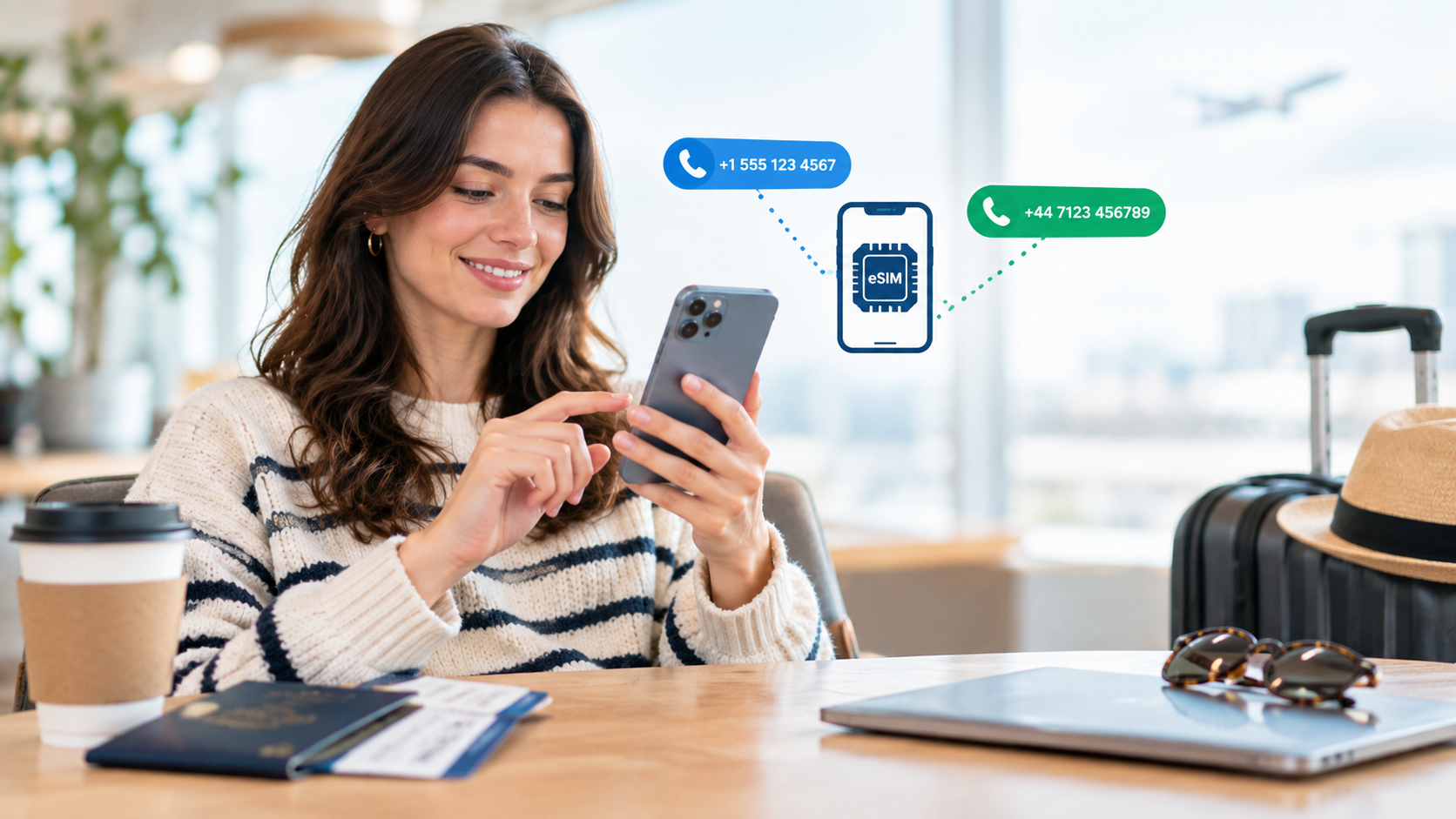
For years, getting a new number meant waiting for something to arrive in the post, finding the little metal pin, and hoping you did not drop the old card into the gap behind the desk. An eSIM removes all of that. The SIM becomes a profile your phone downloads, which means a number can be live while you are still standing in the kitchen. It also means the phone can hold more than one, and that second part is what most people end up valuing. Prepaid eSIM plans make that easy to try without committing to anything.
What an eSIM Actually Replaces
Physically, nothing changes: the eSIM is a small chip already soldered inside your phone. What changes is where the network details live. Instead of being printed onto a card you slot in, they are written to that chip when you activate a plan. Nothing to lose, nothing to cut down to size, and nothing to order and wait for. If you switch handsets, you transfer the profile rather than fishing out a tray with a paperclip.
The practical effect is that the number stops being tied to a piece of plastic. That sounds abstract until the first time you break a phone and want your line working on a spare one the same evening.
Which Phones Can Take One
Most phones sold in the last five or six years support eSIM, but the only answer that counts is the one about your handset, so it is worth checking against the compatibility list before you buy anything. Two details catch people out. A phone bought on contract from another carrier may be locked, which no eSIM can work around. And some models support an eSIM only alongside a physical SIM, not two eSIMs at once, which matters if you were planning to run two digital profiles side by side.
How You Set One Up
The whole thing takes a few minutes on a decent connection:
- Confirm the handset is unlocked and on the compatibility list.
- Choose the plan you want and complete the order, keeping the phone on Wi-Fi.
- Scan the QR code you are sent, or follow the activation link, which opens the phone’s own setup screen.
- Label the line clearly when the phone asks, something like Personal or Work, because you will see that label on every call.
- Set which line handles calls, texts and data by default, then send yourself a test message before you rely on it.
That last step is the one people skip. Setting the default wrong is the difference between a line that quietly works and a month of calls going out from the number you did not intend. It takes thirty seconds to check and is awkward to unpick afterwards.

Why Two Numbers on One Phone Is the Real Draw
Once the novelty of the fast setup wears off, dual numbers is what people keep. A work number that can be silenced at six o’clock without carrying a second handset. A local number kept alongside one that family abroad already knows. A temporary line for selling things online that can be dropped when the listing is gone. Each of those used to require a second phone or a compromise, and now they are a setting.
The plan behind the eSIM is an ordinary prepaid plan, so the usual choices apply. Unlimited Plus and Unlimited Pro suit a main line that carries the data, while the $23 and $39 Unlimited International tiers make more sense for a second number that mostly makes calls, since both include calling to 100 countries and the $23 adds a $5 international roaming credit.
It is also the tidiest way to handle a trip. A second profile can carry a travel plan while your usual number stays reachable, so nobody has to be told you are on a different line this week.
Is It Worth Switching From a Physical SIM
If your current SIM works and you have no use for a second number, there is no urgency, and swapping for the sake of it gains you little. The case is strong in three situations: you want a number active today rather than in three days, you want to separate work and personal calls on one handset, or you travel and want a local line without losing the one people already call you on.
One practical note before you move. Keep the old physical SIM somewhere safe for a week or two after porting rather than throwing it out the same afternoon. Ports are usually quick, but having the original to hand is the simplest insurance there is, and it costs you nothing but a drawer.
Check your handset against the compatibility list and pick your plan at Lycamobile.
You will find more step-by-step guides like this one at The Vogue Club.