

A domestic socket will charge an electric car, eventually. At around 2 kW it adds roughly ten kilometres of range an hour, which is fine for a plug-in hybrid and close to useless for a 60 kWh battery. The step up is a wall-mounted unit on its own circuit, and the choice of home charging units comes down to what the house’s supply can actually deliver rather than what the car can accept. What follows is the way to work that out, plus five pieces of equipment covering the realistic cases.
What the house decides before the car does
Single-phase supply, which is what most French homes have, tops out at 7.4 kW on a 32 A circuit. That is about 40 km of range an hour and fills almost any battery overnight. Three-phase supply allows 11 kW on 16 A or 22 kW on 32 A, roughly doubling or tripling that, but it only helps if the car’s onboard charger can take it — many accept 7.4 kW or 11 kW and no more, so a 22 kW unit would simply idle at the car’s own ceiling.
The second constraint is the household subscription. Running a charger at full output while the oven and the water heater are on can trip the main breaker. Load management solves this: the unit reads total household draw and throttles charging to fit. Some units do it through the communicating meter, others through a clamp on the incoming cable, and it is the feature most worth paying for in an older house.
Fixed unit, socket, or something portable
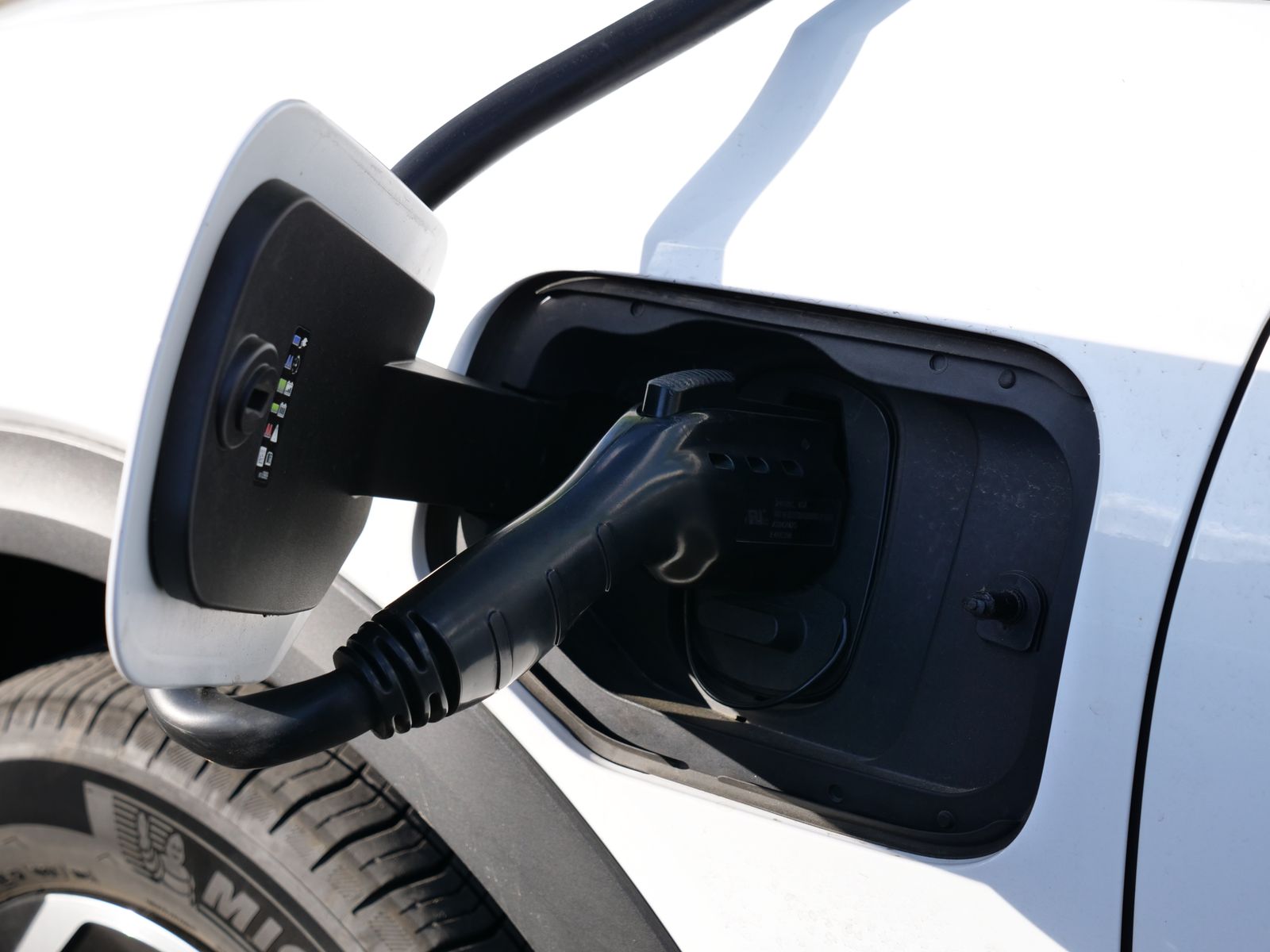
Three formats exist. A fixed wall unit with a tethered cable is the most convenient for a driveway or garage used daily. A wall unit with a socket instead of a tethered cable means carrying your own cable, which is tidier and lets one unit serve two cars with different connectors. A reinforced domestic socket sits between the two, less work to install than a full unit and far faster than a standard plug. Whichever route, the installation itself is regulated work above 3.7 kW, so the wall-mounted charger and the fitting are normally bought together.

Five pieces of equipment for the common setups
These cover single-phase, three-phase, portable and socket-based charging, all from the same electric car charging range.
V2C Trydan 7.4 kW single-phase with tethered Type 2 cable
The default choice for a single-phase home: maximum output for that supply, with the cable permanently attached so there is nothing to fetch from the boot. Park, plug, walk away.
V2C Trydan 22 kW three-phase with socket
The three-phase version, supplied with a socket rather than a tethered lead. Worth it only where the house genuinely has three-phase and the car can use more than 7.4 kW, but in that case it cuts a long charge roughly in half.
Juice Booster 2, 22 kW three-phase 32 A
A portable unit rather than a wall box, with interchangeable adapters for different socket types. This is the answer for a flat with no private parking, or as a second charger that lives in the boot for holidays at a house with only a farm socket.
Legrand Green Up ready-to-fit charging socket
The reinforced-socket route, sold as a complete kit. It is the pragmatic option for a plug-in hybrid or a small battery, where the car cannot exploit 7.4 kW anyway and a full wall unit would be over-specified.
Smappee Type 2, 8 m, 7.4 kW single-phase 32 A
A single-phase wall unit with an unusually long 8 m tethered cable, which matters more than it sounds: it is the difference between reaching the charge port on both sides of a car and having to reverse in a particular way every night.
Don’t forget the cable
A unit with a socket rather than a tether needs a Type 2 charging cable matched to the output — a 7.4 kW lead will not carry 22 kW — and a wall hook so it is not left coiled on the floor. Cable length is worth measuring on the driveway before ordering, not after.
Wrapping Up
Start with the supply, not the catalogue: single-phase means 7.4 kW and an overnight charge, three-phase opens up more only if the car can use it, and load management is what keeps the lights on while it happens. Norauto covers the regulated installation as well, pairing each box with the leads and wall hooks it needs, so one driveway can be specified in a single order. Anyone who wants plain talk about car kit will find a steady run of it on thevougeclub.com.