
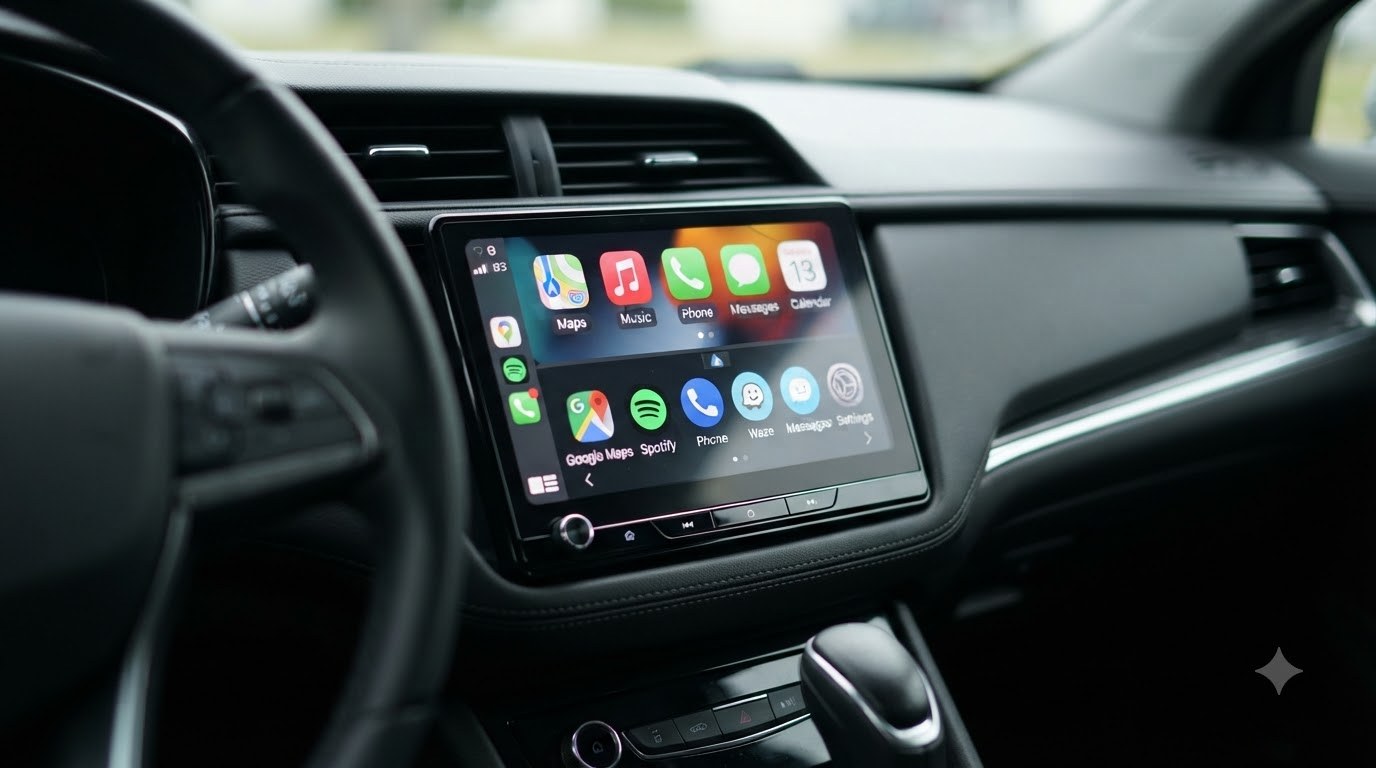
Most cars built before 2017 came with a radio that predates the phone in your pocket. The Bluetooth pairs, the audio plays, and everything else — maps, messages, podcast apps — still happens on a screen clamped to the windscreen. Swapping the head unit for one of the current car stereos moves all of that onto a dashboard display with proper voice control. This piece looks at what wired and wireless mirroring actually change day to day, how fitment works, and five units worth shortlisting.
Wired, wireless, and what the difference costs you
Wired mirroring runs over the USB cable, which means the phone charges while it mirrors and the connection never drops. Wireless mirroring starts the moment the engine does, with the phone left in a pocket, but the phone drains rather than charges and the handshake takes a few seconds longer. Units that offer both let you pick per journey — cable for a long drive, wireless for a ten-minute errand.
Screen type matters more than screen size. A resistive panel needs a firm press; a capacitive one responds like a phone, which is what you want for a map you are pinching at a roundabout. DAB+ tuners are now standard on this class of unit and are the reason many people upgrade in the first place, since DAB holds a signal where FM breaks up.
Single-DIN, double-DIN, and vehicle-specific fits
Dashboards take one of three things. A single-DIN slot is the narrow classic size and takes either a display-less receiver or a unit with a motorised screen that folds out. A double-DIN slot is twice the height and takes the familiar tablet-style face. Vehicle-specific units are the third route: built for one model and model-year range, they drop into the original aperture with the original trim, so nothing looks aftermarket. Those need the right fitting kit and wiring harness for the car, which is why the model year matters as much as the make.

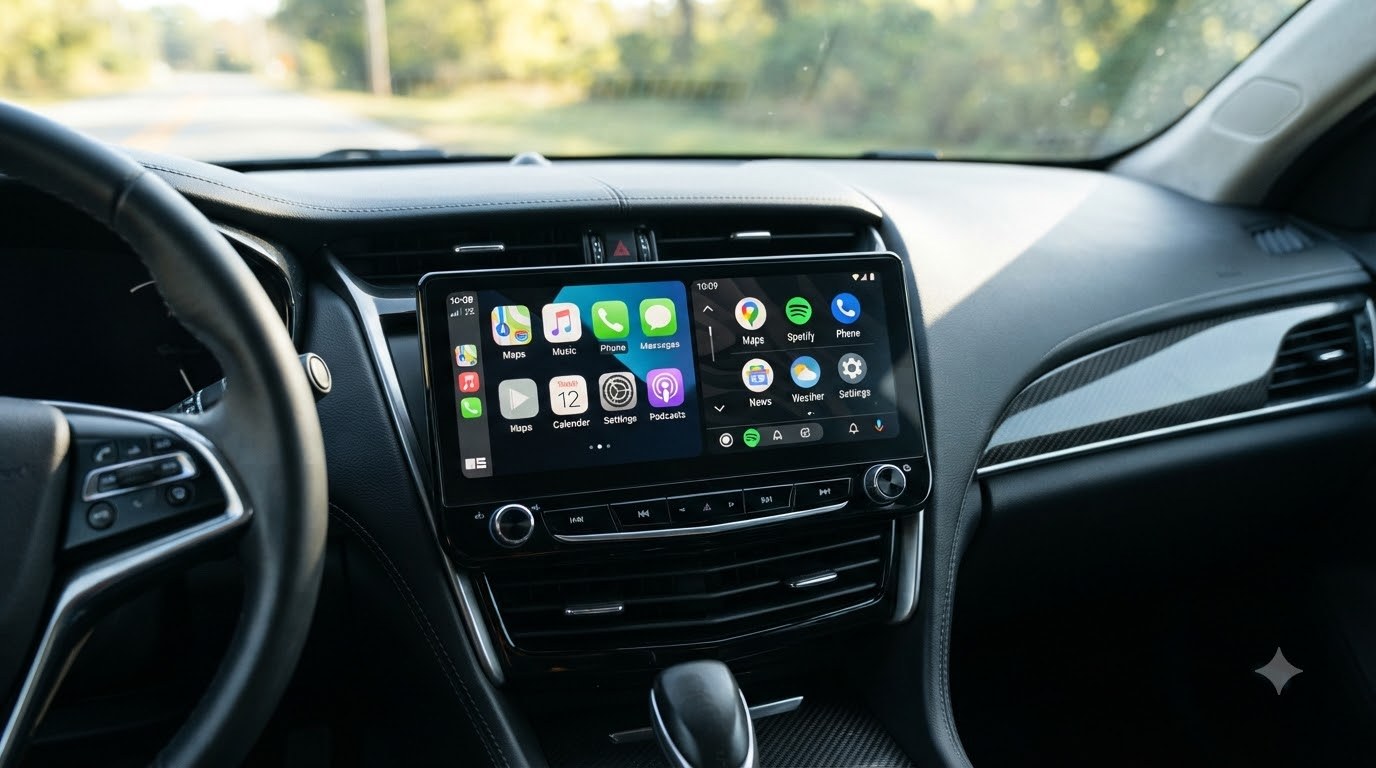
Five units that cover the common dashboard sizes
Each of these lists CarPlay or Android Auto on its own product page, and all five sit in the same in-car audio range.
Pioneer SPH-DA77DAB
A double-DIN unit with both Apple CarPlay and Android Auto, wireless included, plus DAB+. It is the straightforward answer for a car with a double-DIN aperture and no interest in a custom-fit panel, and the capacitive screen handles map gestures without the stab-and-hope of older panels.
Pioneer SPH-EVO82DAB
Also double-DIN, with a larger floating display that sits proud of the dash rather than flush in it. The extra screen area is the point: split-screen mode keeps navigation on one half and media on the other, which is the layout that makes a head unit genuinely better than a phone on a vent mount.
Caliber RMD901DAB-CP
A CarPlay unit with DAB+ at the more accessible end of the range. It is the sensible pick when the goal is simply to get maps and calls onto the dashboard of a second car without rebuilding the whole audio system around it.
Phonocar SINTO-USB
A single-DIN receiver listing both CarPlay and Android Auto — an unusual combination, since most mirroring units need the double-DIN height for a screen. For an older car with a narrow slot, this is the route that avoids cutting the dashboard.
Pioneer SPH-PF97BT-D Perfect Fit
The vehicle-specific option, supplied with the surround and connectors for its target car rather than a universal cage. CarPlay and Android Auto are both on board, and because the bezel is made for the aperture, the finished dashboard reads as factory-fitted.
Before you order
Check three things: the aperture size, whether the car’s steering-wheel buttons need an adapter to keep working, and whether the existing speakers can take the new unit’s output. Reversing cameras and DAB aerials are usually sold separately, so a double-DIN receiver order often needs one or two extras alongside it.
The Bottom Line
The upgrade that changes a daily drive most is not more power — it is getting navigation, calls and audio onto one screen you can reach without looking away for long. Match the aperture, decide whether wireless mirroring is worth the charging trade-off, and budget for the harness. Norauto stocks these units next to the model-specific kits and will do the wiring in its own centres, which takes the guesswork out of the harness question. Round-ups like this one, tested on real roads before they go up, land on thevougeclub.com every few weeks.