Have you ever been out of breath during exercise, or have you ever wondered how well your body utilizes oxygen when you are resting?
Previously, to check your oxygen levels, you would need to carry around some large medical apparatus, but with wearable technology now, this is available at your wrist. People now have an opportunity to monitor their oxygen levels through a wristband that tracks oxygen saturation on a daily basis, and that is why they can notice when something is going wrong and enhance their health condition in general.
In this blog, we will examine how the use of high-tech sensors in fitness tracking wristbands to monitor SpO₂ is important and how it can be utilized to make wellness decisions. Since you know the purpose of an oxygen saturation tracker and the opportunities of a fitness band sensor, you will realize why this mini device is such a mighty one.
We can begin by knowing how fitness band SpO₂ tracking works on the inside of your fitness tracker wristband.
The Science Behind SpO₂ Tracking in Fitness Bands
In general, oxygen saturation (SpO₂) is the percentage of oxygen that your red blood cells transport between your lungs and the rest of your body. An average value falls in the range of 95-100 percent, and anything that is lower can be a sign of respiratory distress, circulation problems, or even sleep-related problems.
A fitness tracking wristband has photoplethysmography (PPG) sensors—small lights and sensors that pass through the skin and detect the amount of light that is reflected by blood that is oxygenated and blood that is deoxygenated. Continuous monitoring can be done even in the middle of the workout or even sleep since this is a non-invasive approach.
The convenience of this technology is its special value. An oxygen saturation monitor embedded in a wristband gives real-time clarity, unlike classic medical equipment, which can require a special setup. An example is that endurance athletes use these readings to learn about the recovery patterns, whereas office-goers can use the same readings to learn the impact of stress or time spent at the office on oxygen flow.
Pro Tip: It is always best to have the fitness tracking wristband tightly and comfortably on the wrist—improper positioning may give erroneous results.
Having understood the science, we should now discuss why it is necessary to monitor the level of oxygen in the blood with the help of a wristband in everyday life.
Why Monitoring Oxygen Levels Matters for Everyone
Although SpO₂ monitoring may be viewed as a feature that only athletes require, it is becoming more and more applicable to any person who wants to remain proactive regarding health. Any fitness band SpO₂ tracking features is not only beneficial to those who take fitness seriously but also a way of making smart lifestyle choices in the day-to-day lives of people.
Key Benefits of SpO₂ Tracking
- Early Detection: Determine abrupt drops in the oxygen readings that could indicate some form of respiratory or sleep disorder.
- Improved Exercises: Athletes are able to adapt the intensity according to oxygen levels in order to prevent overtraining.
- Sleep Insights: The low oxygen saturation at night can be a sign of sleep apnea or inappropriate patterns of breathing.
- Fitness band tracker: Wellness Awareness This gives a fitness band wearer context about stress, fatigue, and energy variations.
As an example, when an individual travels at high altitudes, the level of oxygen naturally decreases. Wearing a fitness tracking wristwatch would mean that the travelers know how their body is responding to the surroundings. In the same vein, a patient who is on the road to recuperation can use the technological gadget to monitor the progress in oxygen saturation on a daily basis.
Other than advantages, we shall discuss the various capabilities that have made such wristbands so useful.
Features That Make Fitness Tracking Wristbands Stand Out
The newest fitness-tracking wristwatch is now much more than just a step counter. Female fitness trackers have evolved to record various health-related measurements, thus being a complete health app.
Shared Characteristics of the present-day devices.
- Oxygen Saturation Tracker: Real-time SpO₂ to use daily.
- Heart Rate Tracking: In-depth heart health knowledge.
- Sleep Monitoring: It tracks the deep and light sleep patterns.
- Activity Detection: Monitors steps, distance and calories burned.
- Optimization of workouts: Individualized measuring tools for running, bicycling, or gym workouts.
The only difference is the ease with which these features merge. A fitness band fitness tracker gives you a comprehensive look at your health with a blend of SpO₂ data to that of the heart rate, sleep cycle, and activity level. As an example, in case your oxygen level decreases at night, the device can be used to judge its presence against poor sleeping quality, which can tell you to take corrective measures.
Naturally, each of the tools has its advantages and disadvantages, and here are the considerations that you should evaluate before going on to choose a fitness tracking wristband.
Practical Tips, Pros, and Cons of Fitness Tracking Wristbands
Having a lot of choices of which fitness tracker to purchase can be overwhelming, but concentrating on the needs of the individual makes it easier.
Pros
- Small and portable enough to use on a daily basis.
- Integrates various capabilities such as heart rate and SpO₂ monitoring.
- Provides information that facilitates preventive health.
- Functions as a lifestyle accessory and a fitness band tracker.
Cons
- The accuracy can be altered by skin color, movement of the wrist, or position.
- There are more advanced models that are costly.
- Too much dependence can result in unnecessary apprehension in case of minor changes.
Tips for Smarter Use
- Take regular charges to allow continuous collection of data.
- Calibrate using medical equipment when you believe it is inaccurate.
- The companion app allows analyzing long-term data trends.
- Keep in mind that a fitness tracking wristband is a supplement to, but not a substitute for, medical advice.
At this point, it is obvious that those wristbands may revolutionize daily health monitoring. So, here is the list of reasons why it is good to add one to your lifestyle.
Why You Should Try a Fitness Tracking Wristband
And the question still lingers on whether a fitness tracking wristband is worth being invested in. Here’s a quick recap:
- Offers constant monitoring of SpO₂ and oxygen saturation.
- Doubles is a fitness tracker activity and workout band.
- Combines several actions using high-tech fitness bands.
- Promotes active health promotion and enlightenment.
- Provides the convenience that is not available with the old type of monitoring devices.
Pro Tip: Treat your fitness tracking wristwatch as a personal health watchdog; it will not substitute doctors but will keep you updated on a daily basis.
And now we can end by mentioning the role of trusted brands in making sure that there is accuracy and long-term value.
Conclusion
The wristband fitness tracker is not just another cool device; it is an effective companion in daily wellness. These devices are available with in-built fitness band sensors and monitor the levels of O₂, sleep, heart rate, and activity to offer information. The fitness band tracker simplifies the process of data-driven living, whether you are an athlete working on optimizing exercises or an individual who wants to take a proactive approach to the issue of health.
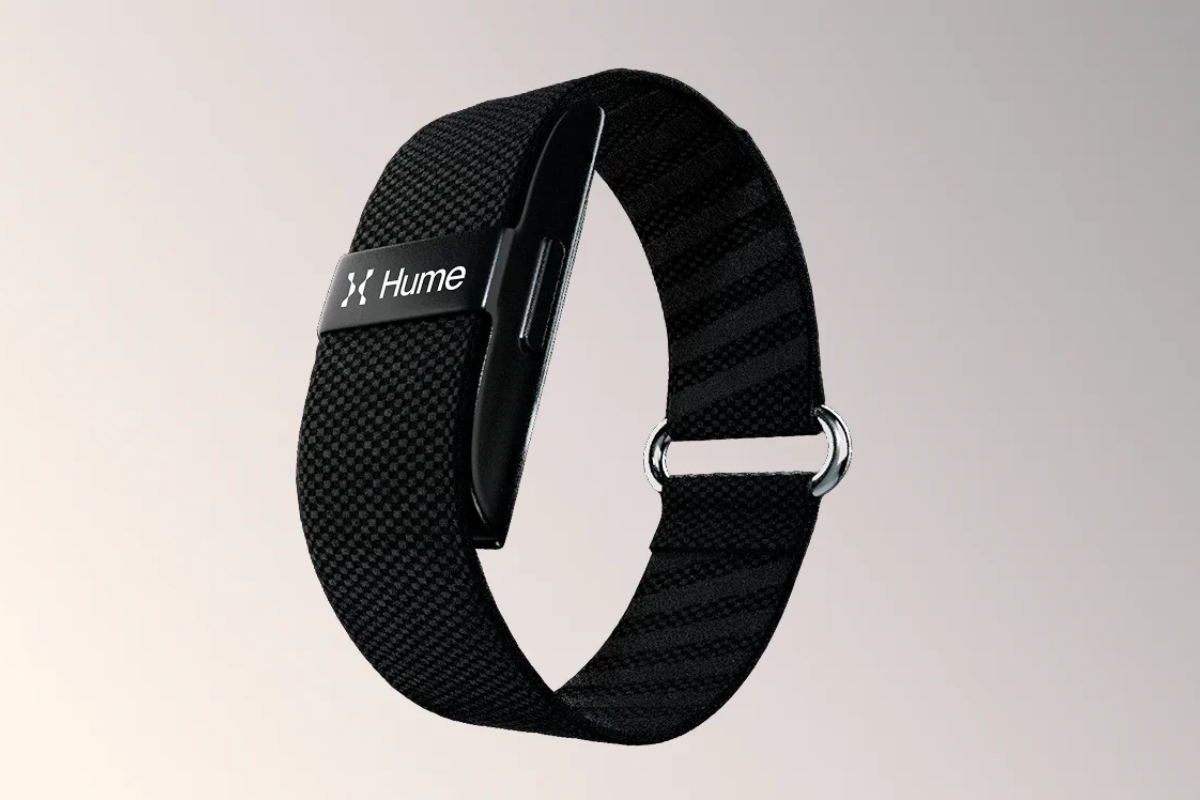
In the case of HumeHealth, we think that awareness and action will be bridged by such devices as the fitness tracking wristband. With trusted technology and user-friendly platforms, Hume Health will make sure that all the readings, an oxygen saturation tracker, sleep analysis, and many others will help you make smarter lifestyle choices.
Be in the know on subjects of fitness and technology; go back to TheVogueClub, where smart living ideas and wellness solutions are the place to get them.