
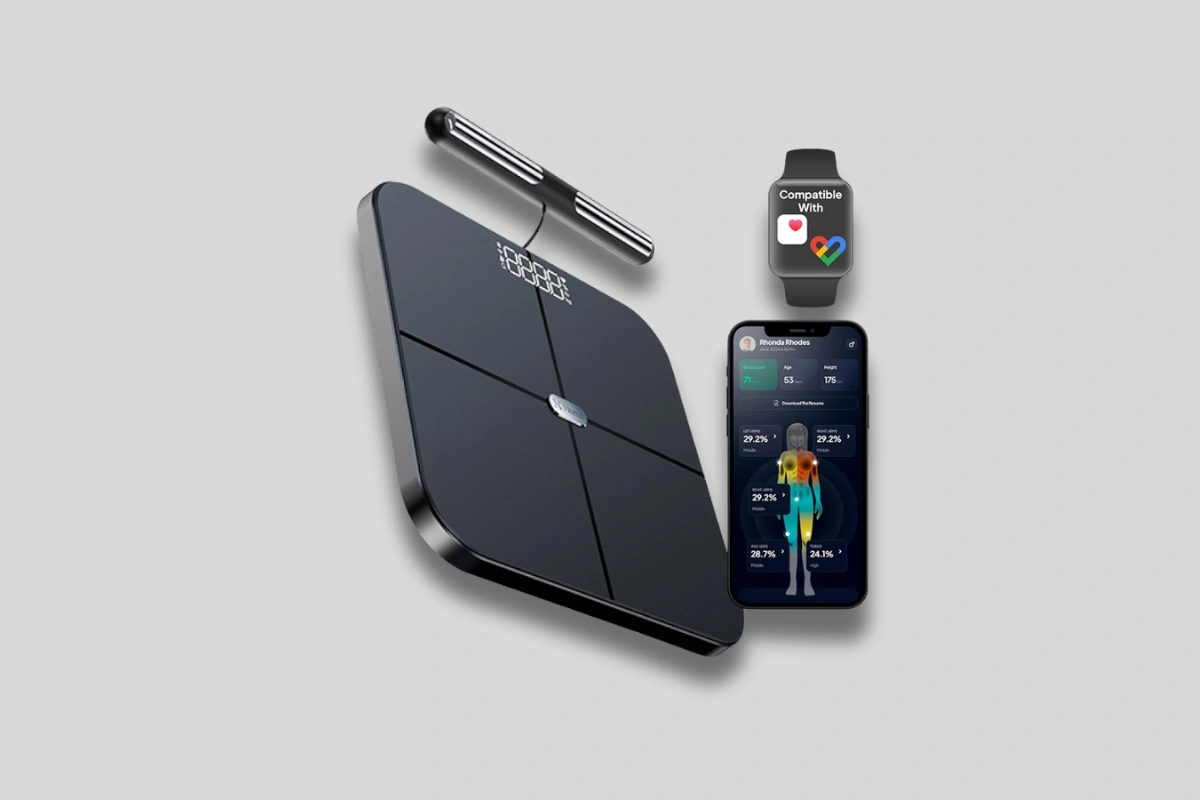
There was a time when “keeping track of your health” meant jotting down your weight in a notebook or hoping your jeans still fit after a festive season. But those days? Long gone. Now, the world of biometric health tracker devices has completely changed the game. They don’t just tell you how many steps you took—they practically whisper secrets about your body: your heart rate, sleep patterns, stress levels, oxygen saturation, and even how anxious your nervous system might be on a random Tuesday morning.
But with so many options on the market, how do you actually choose the right biometric health tracker for you? Honesty means nabbing half us shiny tech gadgets and letting them collect dust in the drawers two weeks later, well, maybe it might be good to define what matters and what doesn’t to get a biometric health tracker that fits in a lifestyle that (moreover) comfortably fits over the wrist.
What Exactly Is a Biometric Health Tracker?
Before we get ahead of ourselves, let’s simplify it. Unlike your usual handy health tracker, a biometric health tracker would be one made wearable within the realms of your body by measures of a smart device specifically engineered to catch real-time data from your body through sensors built in. It is very much like a personal translator of your body because, through complex algorithms and sensors that sound straight out of sci-fi, it interprets your heartbeat, your number of steps, your temperature, the stress on you, and your sleep quality.
It’s the reason your smartwatch buzzes when you’ve been sitting too long, or how your fitness ring magically knows you’ve fallen asleep watching Netflix again.
But here’s the deal: not all biometric health tracker devices are created equal. There are others that are fitting to be called glorified pedometers and others that are mini-laboratories on your wrist.
Start with the Basics: What Are You Tracking For?
Before you buy that latest biometric health tracker, however, you must first ask yourself: what is in it for me? Are you aiming at a marathon, working toward a good night of sleep, or just ignoring your health with all your might?
When you are a fitness fanatic, you will be interested in a biometric monitoring device, as it includes features such as VO₂ max, heart rate variability, and recovery scores. These measurements enable you to optimize your exercises so that you do not overwork or do not perform poorly.
In this case, you can use a biometric health tracker with more focus on mindfulness, heart rate stability, and sleep quality, among other things, and be more interested in wellness or stress management. Numerous health tracker watches can even sense when you are getting tired or sick by tracking the slightest of changes in your body temperature or heart rate.
So really—it’s not just about what the gadget does. It’s about what you need it to do.
Comfort Is Non-Negotiable
Let’s talk about comfort. Because if your biometric health tracker feels like a bulky cuff from a sci-fi movie, you’re not going to wear it for long.
A good physiological monitor should feel more or less natural-something to be worn un-noticed until rumbling polite reminders take effect after sitting for four hours straight (oops). Indeed, lightweight materials, adjustable straps, and water-resistance should be considerations-because yes, you will forget to take it off before a shower at some point.
The Data Dilemma: Simplicity Over Chaos
Here’s a modern-day problem: we have too much data. A biometric health tracker can easily overwhelm you with charts, numbers, and graphs that look like the Matrix. The trick is to find one that gives you actionable insights—data you can understand and actually use.
A great biometric monitoring device shouldn’t just say, “You slept six hours.” It should say, “You slept six hours, but your deep sleep was low—maybe skip that second espresso tomorrow.” That’s the kind of personalized, intuitive feedback that makes health data tracking tools genuinely valuable.
The analyses with the greatest intelligence may corral the most enthusiasm, but they are empty when it comes to the realization of value devoid of the numbers that explain their importance.
Compatibility and Ecosystem
Welcome to the futuristic year of 2025, in which our lives are practically a clustered mesh of connected devices. Your phone is counting your steps, your watch is tracking your pulses, and your refrigerator probably knows how much almond milk you have left. So make sure your biometric health tracker plays well with the other members of your family of technologies.
For instance, Apple has a Health ecosystem, which is the best wearables health tracker available in the market for an iPhone user. However, other brands like Fitbit, Garmin, and Samsung can integrate with great ease into Google Fit for Android users. Some brands even allow API connections with medical apps or nutrition trackers—super handy if you’re all about total wellness.
The right health tracking devices should fit seamlessly into your lifestyle, not make you jump through setup hoops like a circus performer.
Battery Life: The Underrated Hero
Let’s be honest—no one wants to charge their biometric health tracker every night. A long battery life is an unsung hero, especially if you’re traveling or constantly on the go.
While most wearable health tracker models offer between 3–7 days on a single charge, some advanced ones stretch it to 10 days or more. If your device constantly dies mid-week, it’s not helping your consistency. Because when the tracker’s off, so is your motivation.
Design and Style Still Matter
Yes, health is at the forefront, but if your biometric health tracker looks like a mini ankle monitor on your wrist, then it’s not going to go on. Period.
Fortunately, many brands have deciphered that wellness need not go against elegance. With streamlined minimalist bands or stylish metallic finishes, health tracking devices are fashion accessories in their own right.
The best part? You can wear them anywhere—office meetings, dates, gym sessions—without screaming, “I’m tracking my heart rate right now!”
Security and Privacy—The Silent Dealbreaker
This part often gets overlooked, but it shouldn’t. Your smartwatch measures vital data: heart rates, sleep patterns, stress reactions, and even the menstrual cycle. You are supposed to be aware of how such data are stored and to whom they are accessible.
An honest biometric monitoring system ought to be one that possesses transparent privacy policies. There should be data encryption and an option of not sharing. You must never leave your information in the hands of other people. Since the health data is as cool as it can get, it is still your data.
The “Best” Biometric Tracker Doesn’t Exist
The truth bomb here is that there is no universal solution. The best biometric tracker is the one that suits your objectives, your lifestyle, and your level of comfort.
Others are fond of high-tech tools such as heart rate variability and SpO₂. Other people simply want to get their step rings closed and be proud of it. The most important thing is how the biometric health tracker can be used to keep you in touch with your body—and whether it can prompt you to adopt long-term rather than short-lived motivation.
So be it the information-crazed gym rat or the fitness-centered meditator, there is a biometric health tracker that just seems to have been tailor-made to you.
Final Thoughts
The process of making a selection of the ideal biometric health tracker is not about selecting the most glamorous gadget at the counter. It is all about knowing what you need and how you live and how you would like to engage with your health narrative. It is a matter of striking a balance between technology and humanity, between numbers and intuition.
And when in need of a brand that actually is both smart tracking and emotionally intelligent, as well as human-centered in its design philosophy, then HumeHealth is the brand to consider, since your health journey is not just about data, but about understanding.
For more wellness insights, smart fitness tips, and expert advice on living a healthier, data-driven life, visit TheVougeClub.